How much does it cost to make an app by yourself? In money, less than most people fear: typically $500 to $5,000 a year in subscriptions and accounts. In time, more than almost anyone plans for: 200 to 600 hours for a working first version. The subscriptions are the visible price. The hours are the real one.
That trade can be brilliant or brutal, and the difference isn't talent. It's scope. A simple app with one core action is a fair fight for a solo founder with modern tools. An app with roles, payments and integrations is a different sport, whatever the ads say. For the hired-out version of this question, here's how much it costs to build an app when professionals do it.
This post prices the DIY route honestly: what the tools cost, what the tools don't mention, when building it yourself is the smart move, and how to compare your total against a real quote before you spend a season of evenings finding out.
How much does it cost to make an app by yourself? The real numbers
Start with the cash, because it's the easy part. A self-built app has four recurring bills.
The builder. No-code and AI app builders mostly run $25 to $150 a month for a plan that can serve real users. The free tiers are for learning, not launching.
The stores. Apple charges $99 a year for a developer account. Google Play charges a $25 one-time fee. Web apps skip both, which is one reason so many first versions should start on the web.
The services around the app. Email sending, file storage, analytics, a domain. Individually small, collectively $20 to $100 a month once real users arrive.
Payments. Payment providers take a percentage per transaction rather than a subscription, so this one scales with success. Setting it up yourself is free. Getting it right is where DIY builds start to wobble.
Add it up and a lean self-built app runs a few hundred dollars a year. A busier one with paid tiers of everything might reach $5,000. Cash-wise, that's the whole story, and it's genuinely cheap.
Which is exactly why the cash number is misleading.
The real price is your hours
A first version built by a first-time builder typically takes three to six months of part-time work. Call it 200 to 600 hours: learning the tool, building the screens, wiring the logic, testing on real phones, fixing the things that only break on Tuesdays.
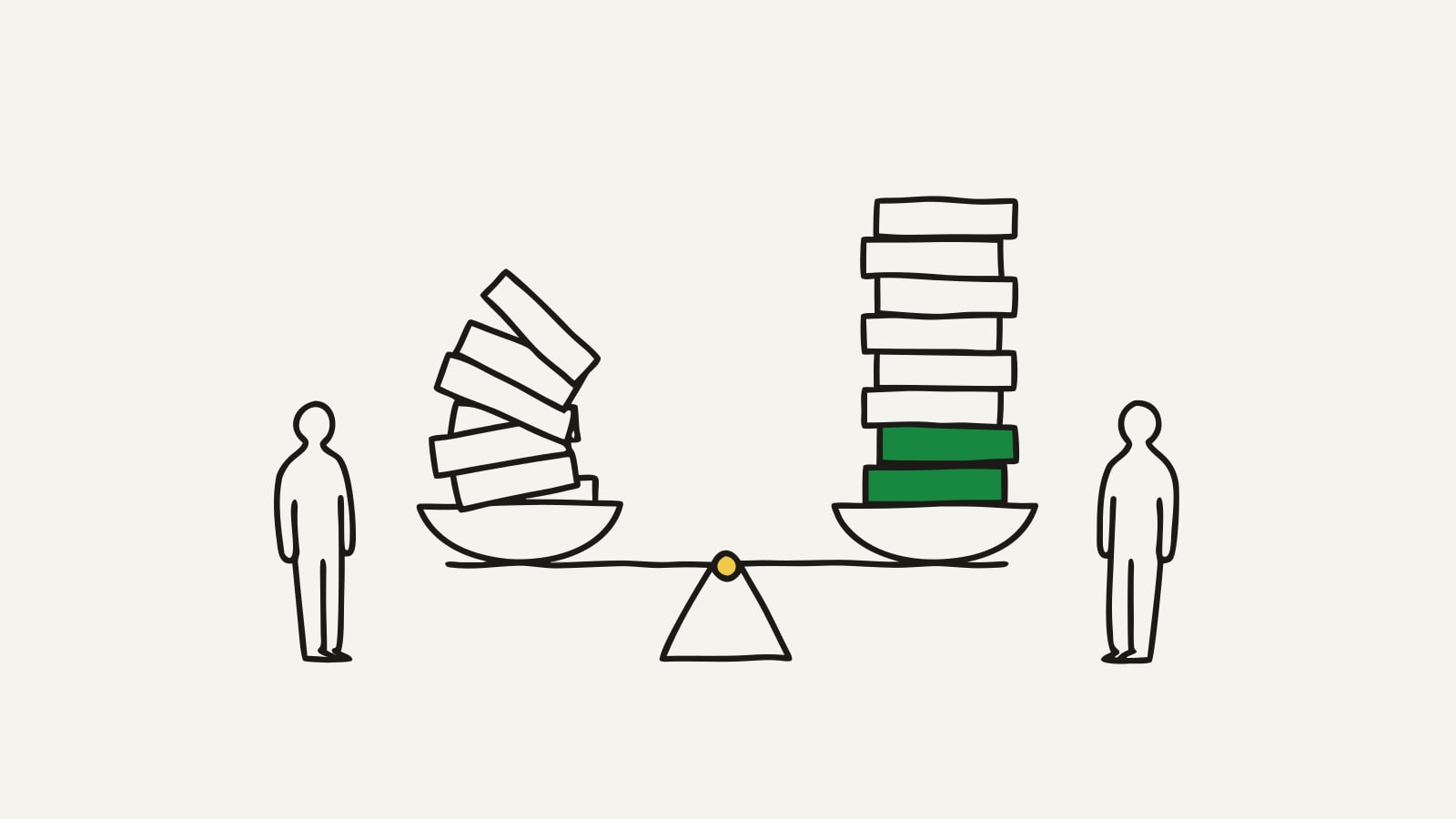
Price those hours at whatever your time actually earns, and the honest total appears. Two hundred hours at even $30 an hour is $6,000 of you. Six hundred hours is $18,000. Suddenly the comparison with a professional build isn't cheap-versus-expensive. It's your-time-versus their-time, and their time comes with experience you'd be buying instead of earning.
A self-built app is never free. You pay in the currency you happen to have more of: money or evenings.
There's a second cost hiding in the hours: the launch you didn't have. If the app supports a business, six months of building part-time is six months of not selling, not learning from users, and not finding out the idea needs to change. Sometimes that delay costs more than any invoice. If you haven't pressure-tested the idea yet, do that before spending either currency. Here's how to validate an app idea without building anything first.
What do the three DIY routes cost?
"By yourself" covers three very different roads, and they're priced in different currencies.
| Route | Money | Time to first version | What you end up with |
|---|---|---|---|
| No-code builder | $25 to $150 a month | 2 to 4 months part-time | A real app inside the platform's limits |
| AI app builder | $20 to $100 a month | Days to weeks for a demo, months for production | Fast start, fragile finish without technical review |
| Learning to code | Nearly $0 in tools | 6 to 12 months including the learning | Full control, longest road, a new skill |
No-code builders are the steady middle path. The limits are real but so is the output, and thousands of genuine businesses run on them. You'll feel the ceiling when you want a screen or flow the platform didn't anticipate.
AI builders are the sprinters. A demo in a weekend is now completely normal. The gap between that demo and something that safely holds strangers' data and money is the part the demos don't show, and it's why so many AI-built apps get a professional rebuild at exactly the moment they start working. If you're already there, here's how to fix a vibe-coded app without paying for a rewrite you may not need. If you haven't started yet, vibe coding vs hiring a developer lays out both routes with real numbers.
Learning to code is the scenic route. Cheapest in cash, priciest in months, and the only one where the hours convert into a permanent skill. It's the right road if the skill itself is part of what you want.
See what the built-for-you version would cost
Describe your idea in plain English and get a free itemized plan with modules, phases and an estimated total. Compare it against your evenings before you spend them.
Get your build planWhen making an app yourself is the right call
DIY isn't the budget option. It's the right tool for specific jobs.
Testing whether anyone cares. A rough self-built version that twenty real users touch teaches you more than a polished app nobody asked for. Perfect for the stage where the idea is still a guess.
Internal tools. An app only your own team uses can tolerate rough edges. No app store review, no strangers' card details, no 2am support.
Simple, single-purpose apps. One kind of user, one core action, no outside systems. This is the scope where modern builders genuinely shine and where paying $20,000 would be silly.
Founders who want the skill. If understanding how software fits together will pay off across your career, the hours are tuition, not cost.
The common thread: low stakes or narrow scope. Inside that box, building it yourself is the smart money.
Where the DIY build hits the wall
Outside that box, three things end most self-built apps, and none of them announce themselves in month one.
Complexity you can't see from the brochure. Multiple user roles. Refunds and partial payments. Two systems that must agree with each other. Each sounds like a feature and behaves like a project, which is why app development quotes vary so much even among professionals pricing the exact same idea.
The maintenance nobody mentions. Apps aren't kettles. Platforms update, integrations break, users find the one path you never tested. Self-built means self-maintained, indefinitely, and the hours keep accruing long after launch.
The rebuild. The most common ending: the app works, the business grows, and the self-built version becomes the bottleneck. That's a good problem, and it's also a second budget. The healthiest way to build by yourself is to treat version one as disposable and let the rebuild be a victory lap, not a shock.
DIY or hire: run both numbers before you choose
Here's the move that costs nothing and settles the question: price both roads for the same scope.
Write down what version one actually does. One page of plain-English modules is enough, and the discipline of deciding what to build first shrinks the answer for both roads at once. Then put the two totals side by side. Your route: subscriptions plus your honest hours at your honest rate. The hired route: a real app development quote priced against those same modules, line by line.
Sometimes the comparison says build it yourself, and now you know your time is well spent. Sometimes it says the professional version costs less than your evenings do, and you just saved a season. Either answer is a win. Guessing is the only losing move.
Know the number before you spend the nights
Making an app by yourself costs a few thousand dollars and a few hundred hours. Whether that's a bargain depends entirely on what the alternative would cost for your specific idea, and that's a number you can get for free.
Get an itemized build plan: your idea split into modules and phases with an estimated total, in plain English. If DIY still wins, build with confidence. If it doesn't, you found out in minutes instead of months.
Common questions
How much does it cost to make an app by yourself?
In money, usually $500 to $5,000 a year: a builder subscription, app store accounts, and a handful of services for email, hosting and payments. The real cost is time. A working first version typically takes 200 to 600 hours of evenings and weekends, and that number decides whether DIY is a bargain or the most expensive route available.
Can I build an app myself with no coding experience?
Yes, up to a point. No-code and AI builders can genuinely carry a simple app with one core action all the way to real users. The wall arrives with complexity: multiple user roles, custom payment flows, and connections to other systems. Most self-built apps that hit that wall get rebuilt, so plan for the rebuild rather than being surprised by it.
Is it cheaper to build an app yourself than to hire a developer?
In cash, almost always. In total cost, only if your time is genuinely free and your scope stays simple. Six months of evenings has a price, and so does launching six months later. Compare the tool subscriptions plus your hours against a professional quote for the same scope before deciding.
How long does it take to build an app yourself?
Most first-time builders need three to six months of part-time work to reach something real users can open, which lands around 200 to 600 hours. Simple single-purpose tools come together faster. Anything with payments, several user types, or outside integrations stretches the far end.
What do no-code app builders cost per month?
Most sit between $25 and $150 a month for a plan that can serve real users, with entry tiers below that for building and testing. Watch the tier jumps: the features a real launch needs, like custom domains, more storage, or removing the builder's branding, tend to live a tier or two up.
Get a build plan for your idea
Describe what you want to build and get a clear, itemized plan in a couple of minutes.
Get your build plan