How much does it cost to build an app? For most ideas, a lean first version lands somewhere between $5,000 and $50,000 in 2026, and that's the most honest single answer anyone can give you before looking at your idea. The scary part isn't the price. It's the range.
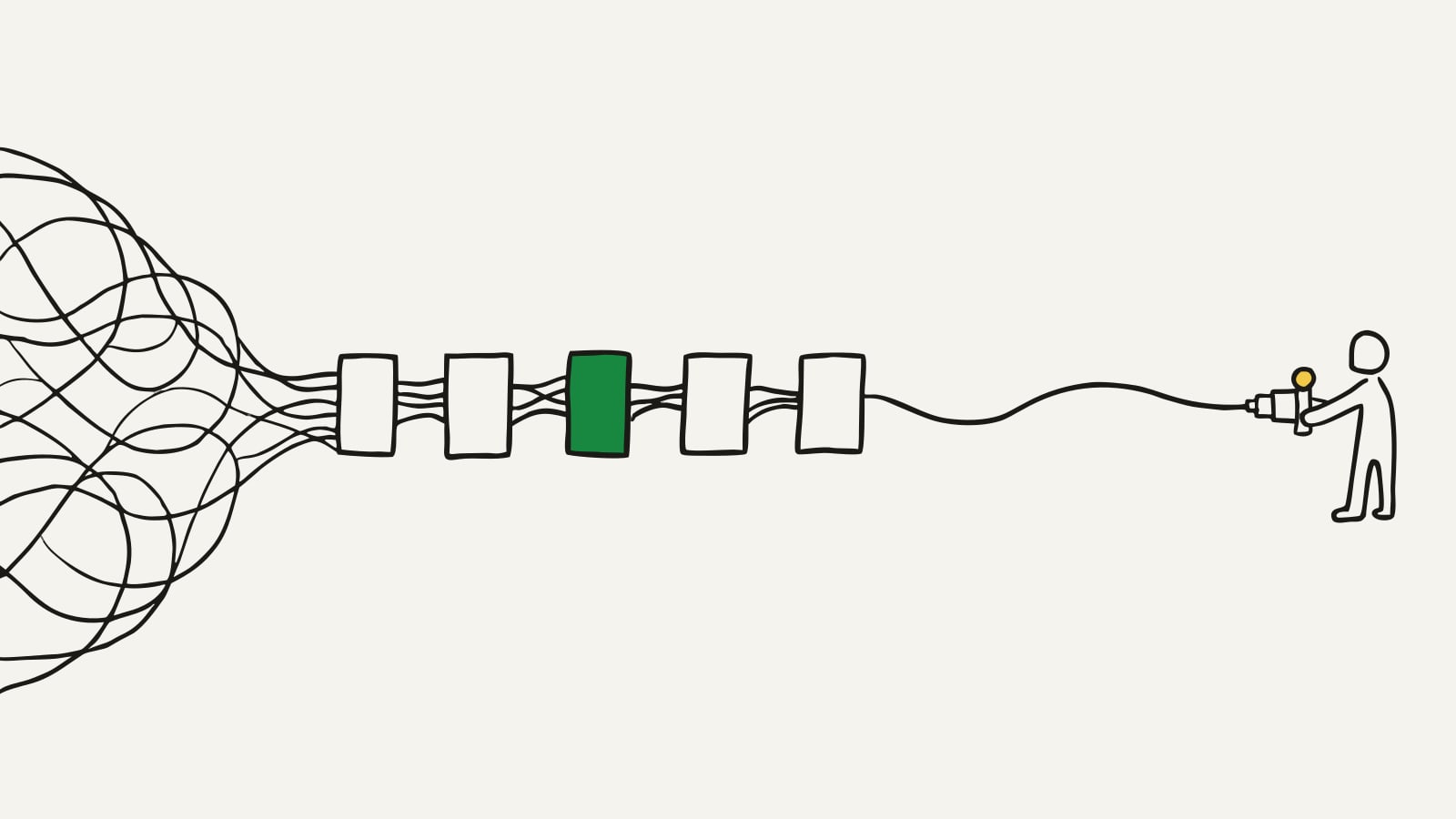
Ask five developers to price the same idea and you'll get five numbers that barely look related. One says $8,000. One says $150,000. Neither of them is lying. They're pricing different things.
This post gives you real ranges by app type, shows you what you're actually paying for, and walks through how to turn a vague ballpark into a number you can trust. One thing up front: the price of an app is mostly decided by what goes into the first version, so working out what features your MVP should have will move your quote more than anything else on this page.
How much does it cost to build an app? The short answer
Most articles bury this under a thousand words of hedging, so here it is up front. These are typical ranges for a lean, well-scoped first version built by a competent small team.
A simple internal tool: $5,000 to $25,000. A booking or scheduling app: $8,000 to $30,000. A two-sided marketplace: $20,000 to $80,000. A consumer mobile app: $15,000 to $60,000 and up once you're on two platforms.
And yes, a large agency can quote $250,000 for an idea a small studio would build for $40,000. Both numbers can be honest. They describe different amounts of software, built by different teams, at very different rates.
Notice what's missing from those ranges: your idea. That's the point. Until the first version is pinned down, any number is a guess about scope wearing a currency symbol. The ranges tell you what's normal for a category. Only an itemized plan tells you where in the range your idea actually sits.
One thing has genuinely changed by 2026: AI-assisted development has pulled build costs down, sometimes by half, for teams that use it well. That's why the low end of these ranges sits lower than what you'd have read a few years ago. It hasn't made pricing simpler though. If anything, the spread between quotes has grown, because teams now differ more than ever in how they work.
So treat every range in this post as a planning tool, not a promise. The real number for your idea comes from itemizing it, and we'll get to exactly how.
Why does the same idea get such different prices?
Three reasons, and none of them is dishonesty.
Everyone imagines a different app. Say "an app like Airbnb, but for storage space" to five people, and one pictures a simple website with a contact form while another pictures native iOS and Android apps with payments, messaging, reviews, and identity checks. You didn't specify, so each of them fills the gaps with their own assumptions, then prices those assumptions.
Everyone charges a different rate. A freelancer in a lower-cost country, a local studio, and a big-name agency can differ by a factor of ten on rate alone, for work of overlapping quality. Same feature, wildly different invoice.
Everyone pads for uncertainty. A vague brief is risky to price, and the seller covers that risk with margin. The vaguer your description, the bigger the padding. Unclear founders systematically pay more for the same software.
There's a full post on why app development quotes vary so much. The short version is that a wide spread of quotes isn't a market mystery. It's a symptom of an unspecified project.
What are you actually paying for?
Here's the mental shift that makes app pricing click: you're not buying "an app", you're buying a stack of modules. Each module is a chunk of work with its own cost, and the same four show up in almost every project.
Accounts and login. Sign up, log in, reset a password, stay logged in securely. It sounds trivial and it isn't. Done properly, accounts are one of the first modules in any build plan, often $1,000 to $4,000 of work on their own.
Payments. Taking money means connecting a payment provider, handling failed cards, issuing refunds, and keeping records. One-off payments sit at the cheap end. Subscriptions, seller payouts, and invoicing sit at the expensive end. Payments regularly add $3,000 to $15,000 to a first version.
An admin area. Someone has to run this thing. Approving listings, refunding customers, answering support questions, seeing what's actually happening. Founders forget the admin side constantly, and it can be a third of the total build.
Notifications. The emails, texts, and push messages that confirm, remind, and alert. Each one is small, but they touch everything, and every extra channel is its own piece of work.
On top of those sits your core loop, the thing that makes your app your app. That's where the real variance lives, and it's the one part only you can describe.
How much does it cost to build an app, by type?
Typical first-version cost ranges by app type, assuming a lean scope:
| App type | Typical first version | What drives the price |
|---|---|---|
| Internal tool | $5,000 to $25,000 | Workflows and permissions, little polish needed |
| Booking app | $8,000 to $30,000 | Calendars, reminders, cancellations |
| Marketplace | $20,000 to $80,000 | Two user types, payments, trust and reviews |
| Consumer mobile app | $15,000 to $60,000+ | Two platforms, app store review, push notifications |
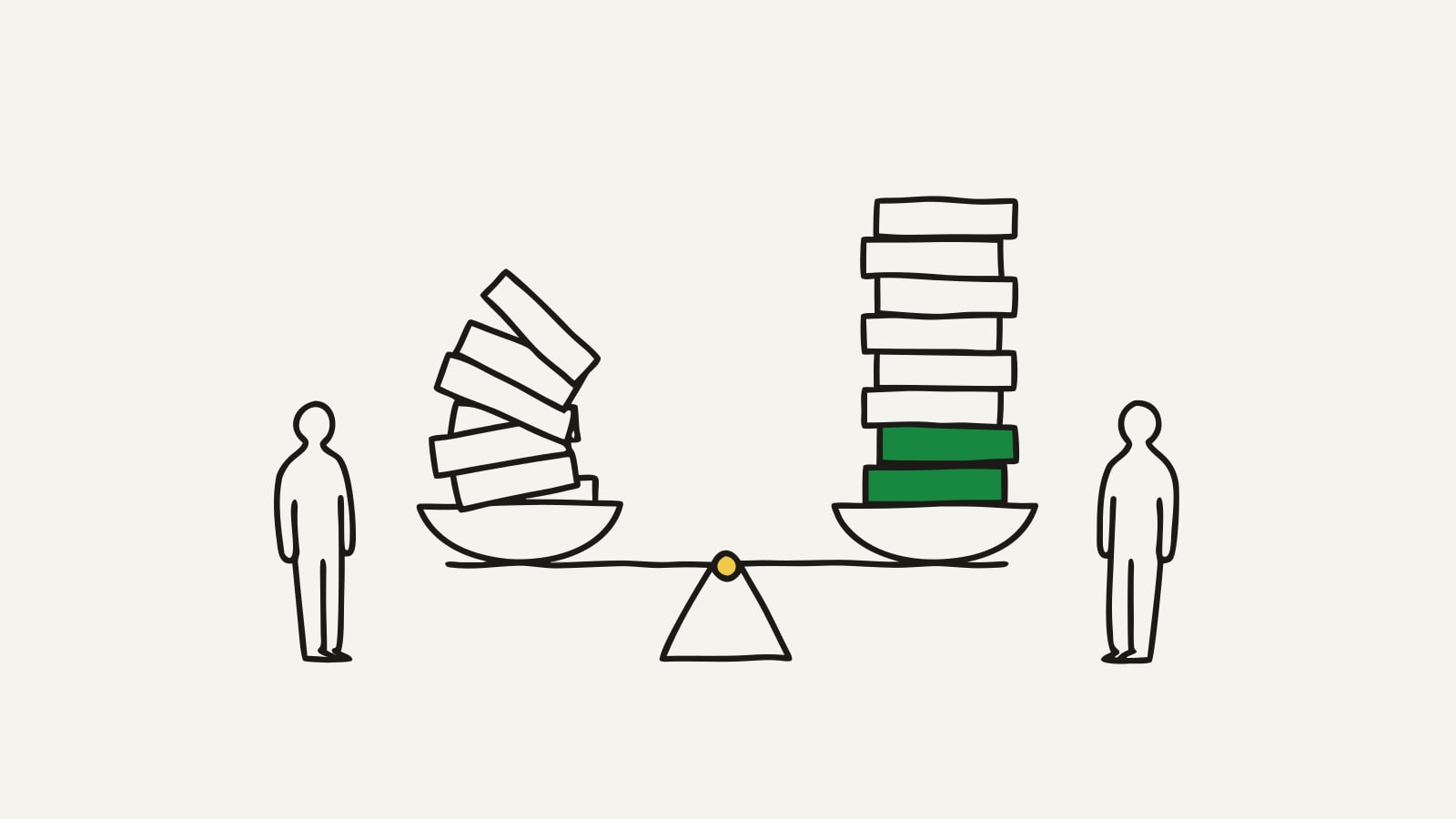
Treat these as ranges for a first version, not a finished product. A booking app for one barber shop sits at the bottom of its range. A booking platform for a thousand barber shops is a different product wearing the same name.
Two patterns stand out. Internal tools are cheap because there's one kind of user and no need for marketing polish. Marketplaces are expensive because everything doubles: two audiences, two dashboards, two onboarding flows, plus the payment and trust features that make strangers willing to hand each other money.
And if your idea works as a website first, build it as a website first. A web app runs on every phone from day one, skips the app stores entirely, and typically costs 30 to 50 percent less than building native apps for two platforms. If it turns out to be a brochure site rather than software, building a website using AI may cover the whole job for the price of a subscription.
Cheaper again: some ideas aren't an app at all, they're one process that needs to run by itself. If that sounds like yours, Zapier versus a custom automation is the comparison to read instead, and the numbers there are a fraction of this table.
Get a real range for your idea
Describe your app in plain English and get an itemized build plan: modules, phases, and an estimated total you can hold every quote against.
Get your build planThe app development costs nobody quotes up front
The table above covers the features you'd think to list. Most blown budgets come from the things you wouldn't.
Edge cases. What happens when a payment fails halfway through a booking? When two people grab the last slot at the same second? When someone cancels after the reminder went out? Each of those is real engineering work, and almost none of it appears on a feature list. The happy path is maybe half the build.
Integrations. Every outside service your app talks to, maps, calendars, accounting software, text messaging, is its own mini-project. Some are friendly and take a day. Some are old, badly documented, and take weeks. Every integration deserves its own line in the plan and its own price.
Changes. The most predictable surprise in software: you'll change your mind once you see the real thing. Good teams expect this. It's also the heart of the fixed price vs hourly software development question, because on fixed-price contracts, mid-build changes are where the surprise invoices come from. Hold back a buffer of 10 to 20 percent of the build cost.
The features on your list decide the size of the quote. The questions not on your list decide the size of the overrun.
One more quiet cost: keeping the app alive. Hosting, app store fees, and small fixes typically run a few hundred dollars a month once you launch. Not dramatic, but it belongs in your maths from day one.
How to get a number you can trust
The order matters more than people realise: itemize first, then compare.
Most founders do it backwards. They write two paragraphs, send them to five developers, and get back five incomparable guesses. Then they pick the middle one and hope.
Flip it around:
- Pin down the lean first version. One core loop, done completely. Everything else becomes Phase 2, not a cut.
- Break it into modules. Accounts, payments, admin, notifications, your core loop. Each one a named line item with a short description of what it does.
- Send the same itemized plan to everyone. Now every developer is pricing the same document, and you can compare line by line instead of gut feeling against gut feeling.
When quotes differ on the same itemized plan, the difference finally means something. You can see that one team is expensive on mobile, another skipped the admin area, a third included a phase you didn't ask for. That's a negotiation. Five numbers against a vague paragraph is a lottery.
A trustworthy quote has three properties. It's itemized, so you can see what each part costs. It states its assumptions, so you know what's included and what isn't. And it's phased, so you can start with less and add more once the first version proves itself. A developer who won't give you those three things isn't necessarily dishonest, but they are asking you to buy blind.
This is exactly what QuoteMyApp does. You describe your idea in plain English, answer a few questions, and get an itemized plan with modules, phases, and an estimated total, free. Here's how it works.
The price is a decision, not a mystery
So, how much will your app cost? Mostly, as much as you decide to put in the first version. The ranges in this post tell you what's normal. An itemized plan tells you what's true for your idea.
Stop collecting guesses. Get a free itemized build plan, see your idea split into phases and priced, and walk into every developer conversation already knowing what the number should look like.
Common questions
How much does it cost to build an app in 2026?
There is no single number, because the price depends entirely on what goes into the first version. In typical experience, a lean first version of a simple app lands between $5,000 and $30,000, while marketplaces and consumer mobile apps often run $20,000 to $80,000 or more. The way to get a real number is to itemize the build into modules and price each one.
Can I really build an app for $5,000?
Yes, if the first version is genuinely small. A simple internal tool or a single-purpose web app with accounts and one core workflow can land near that figure, especially with modern AI-assisted development. The moment you add payments, multiple user types, or native mobile apps, the number climbs quickly.
Why do quotes for the same app vary so much?
Because each developer or agency is silently pricing a different version of your idea. One imagines a bare-bones web app, another imagines native iOS and Android apps with an admin dashboard. Different rates, different assumptions, and different amounts of padding for uncertainty do the rest.
How much does an MVP cost?
Most MVPs land between $5,000 and $50,000 depending on the type of app and who builds it. The biggest lever is scope. An MVP built around one core loop costs a fraction of one that tries to do everything on day one, so cutting the first version down is the most effective way to lower the price.
What makes an app more expensive to build?
Payments, multiple user roles, third-party integrations, native mobile apps, and edge cases like refunds and cancellations. Each of these adds real engineering work, and several of them add ongoing costs too. An itemized plan shows you exactly which ones your idea needs and which can wait for a later phase.
Get a build plan for your idea
Describe what you want to build and get a clear, itemized plan in a couple of minutes.
Get your build plan