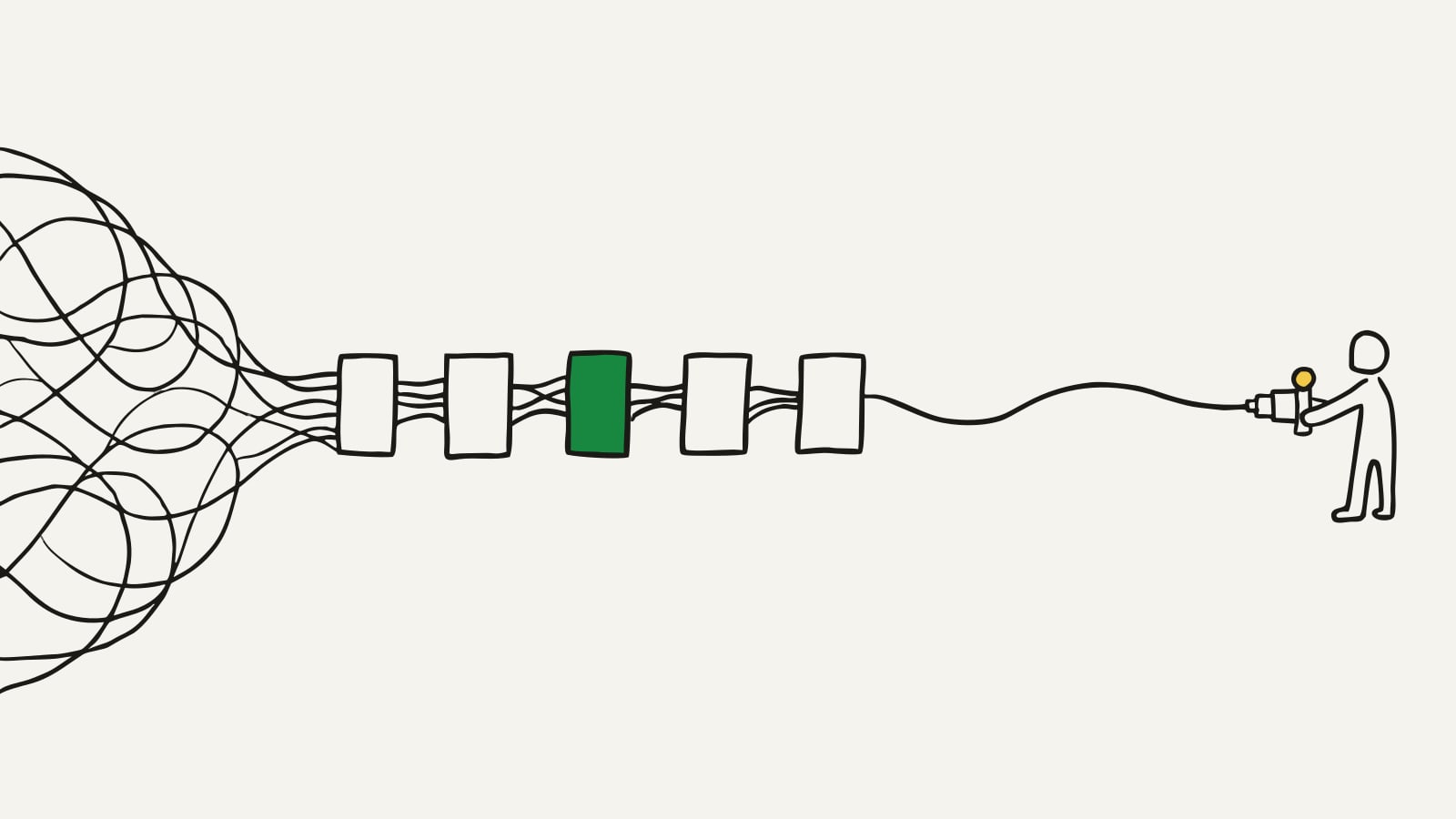
App development quotes vary so much because each developer prices their own assumptions, not your idea. Send the same one-paragraph description to three developers and you can get $8,000 from the first, $40,000 from the second and $120,000 from the third. Nobody lied to you. They quoted three different projects that happen to share a name.
That sounds like chaos, but it's actually useful. Once you know what each number is really pricing, the spread stops being scary and starts being information. And once you fix the thing causing the spread, your brief, the quotes come back close enough to compare line by line.
This post walks through what low, mid and high quotes for the same idea typically include, why fuzzy scope carries a hidden premium, and how to make any set of quotes comparable. If you're still working out what a sensible number even looks like, read how much it costs to build an app first, then come back.
Why do app development quotes vary so much?
Because a paragraph is not a spec.
A one-paragraph idea leaves hundreds of decisions open. Which platforms. How custom the design is. Whether people need accounts. How payments work. What staff can see that customers can't. What happens when a payment fails or a booking clashes. How much testing happens before launch. Who fixes things after launch.
Each developer answers every one of those questions silently, in their head, based on their habits, their team and the last ten projects they shipped. Then they price their answers. You never see the assumptions. You only see the total.
Different assumptions, different scope, different price. The variation isn't noise on top of the quote. The variation is the quote.
A quote prices assumptions, not your idea
Take a concrete example. A founder writes one sentence: "An app where customers book appointments with my staff and pay online." She sends it to three developers.
The first developer hears: a simple booking page, one shared calendar, a payment link from an off-the-shelf provider. A few weeks of work. $8,000.
The second hears: a proper web app with customer accounts, individual staff schedules, card payments built in, and a basic dashboard so staff can manage their day. A few months of work. $40,000.
The third hears: iOS and Android apps plus a web version, custom design, roles and permissions, refunds and no-show fees, reporting for the owner, automated tests, and support after launch. A serious build. $120,000.
Same sentence. Three completely different products.
A quote is never a price for your idea. It's a price for one developer's private version of your idea.
The whole game of comparing quotes is getting that private version out of each developer's head and onto paper, before any money moves.
The risk premium of fuzzy scope
There's a second force pushing the numbers apart: risk. Every unknown in your brief is a risk somebody has to carry, and developers handle unknowns in exactly two ways.
They exclude them. That keeps the number small and moves the risk to you. Anything not written down becomes a change request later, billed on top.
Or they buffer them. That keeps the risk with them and pushes the number up. An agency with project managers and payroll will pad a fuzzy brief heavily, because they've been burned before.
Freelancers tend to exclude. Agencies tend to buffer. Neither is being dishonest, they're just protecting themselves from the same fog in different directions.
Here's the part most founders miss: the spread between your quotes is a measurement. It measures the fuzziness of your brief, not the honesty of the market. Tighten the brief and the spread tightens with it.
What do the cheap and expensive quotes actually include?
What the cheap quote leaves out
The $8,000 quote is usually an honest price for a small project. One platform. A template design. The happy path only. No admin tools, so you email the developer when something needs changing. A quick manual check instead of real testing. Nothing after launch.
Sometimes that's exactly right. If you're testing whether anyone wants this at all, a small slice shipped fast beats a full product shipped never. Deciding which slice comes first is its own skill, and it's the subject of its own post.
The danger isn't the quote, it's the exclusions you didn't read. Everything left out of a cheap quote comes back later as change requests at an hourly rate, once you're already committed and switching developers is painful.
The cheap quote is the cheapest way to build a small slice of your idea, and often the most expensive way to build all of it. Know which one you're buying.
What the high quote prices in
The $120,000 quote isn't padding, most of the time. It's pricing things the cheap quote never mentioned. Multiple platforms. Custom design. A proper back office so your team can run the business without emailing anyone. The edge cases: failed payments, cancellations, refunds, double bookings. Automated tests so new features don't quietly break old ones. Project management. A warranty period after launch.
It also prices the seller. An agency quote carries office space, account managers and a risk buffer sized to your fuzzy brief.
The honest question about a high quote isn't "why so much?" It's "how much of this do I need in version one?" Often a chunk of it belongs in a later phase, not in the bin. A good itemized plan makes that an easy conversation instead of an awkward one.
The same idea at three price tags
Put side by side, the three quotes for our booking app look like this. This is a typical pattern, not a rule, but it holds surprisingly often.
| What's inside | Low quote (around $8,000) | Mid quote (around $40,000) | High quote (around $120,000) |
|---|---|---|---|
| Platforms | Web only | Web app, works on phones | iOS, Android and web |
| Design | Template | Custom on key screens | Fully custom |
| Accounts | Basic email login | Login, reset, profiles | Roles and permissions |
| Payments | Payment link | Card payments built in | Refunds, no-show fees, invoices |
| Admin tools | None | Basic dashboard | Full back office |
| Edge cases | Not scoped | The common ones | Scoped and built |
| Testing | Developer checks by hand | A manual test pass | Automated tests |
| After launch | Not included | Short fix window | Support agreement |
Read the table again and notice what it really shows: these aren't three prices for one product. They're three products. Comparing the totals tells you almost nothing. Comparing the rows tells you everything.
Get one plan every developer can price
Describe your idea in plain English and get a free itemized build plan, modules grouped into phases, that you can hand to every developer you talk to.
Get your build planHow to make app development quotes comparable
There's one fix, and it works every time: hand every developer the same itemized plan, and ask them all to price the same lines.
Write the scope down as modules. Not technology, behaviour. "Customers can book a slot and pay." "Staff can see their own schedule." "The owner can refund a booking." If you want a structure to follow, here's how to write an app requirements document without being technical.
Group the modules into phases. Mark what's version one and what comes later. This stops one developer quoting your dream and another quoting your minimum.
Send the identical document to everyone. Ask each developer to price it line by line, and to write down their assumptions and exclusions next to each line. Anyone who won't do this has told you something important.
Compare rows, not totals. When one developer prices the payments module at triple the others, that's a conversation, not a mystery. Maybe they've seen something the others missed. Maybe they're padding. Either way, you can now ask.
Once everyone is pricing the same project, the differences that remain are the ones that actually matter: rate, speed, experience and quality. Those are worth paying more or less for. Phantom scope isn't.
What are the red flags in a quote?
Whatever the number, walk away slowly if you see these:
- One number, no breakdown. A single total is unaccountable. You can't question a lump.
- No exclusions listed. Every quote excludes things. Honest quotes name them. Silent quotes bill them later.
- A price with zero questions asked. If a developer can price your idea from one paragraph without a single question, they're pricing their assumptions and hoping you won't notice.
- "We'll sort the details as we go." That sentence has burned more budgets than any bad line of code.
- Pressure to sign before the scope is written down. Speed pressure and scope fog together are how bad projects begin.
None of these mean the developer is a crook. They mean the quote isn't yet something you can hold anyone to, including yourself.
Questions to ask a developer before you sign
You've made the quotes comparable and picked a favourite. Before you sign, ask these, and get the answers in writing:
- What exactly is excluded? The most valuable list in the whole project.
- How are changes priced once we start? Changes will happen. You want the mechanism agreed while everyone's still friendly.
- Who owns the code, and where does it live? You want the repository, the accounts and the keys in your name, from day one.
- What's covered after launch, and for how long? Bugs found in week two shouldn't be a new invoice.
- How do we both know a module is done? Agree what "done" means per line of the plan, not per vibe.
- What assumptions are you making? Ask them to write the assumptions into the quote itself.
A good developer answers all six easily, because good developers want the same clarity you do. The answers matter, but the hesitation matters more. For the conversation around all this, here's how to explain your app idea to a developer.
Make the spread work for you
Three quotes that land miles apart aren't proof that developers are dishonest. They're proof that each one priced a different project, because your idea left room for three different projects to exist.
Close the room. Put the scope in writing, split it into phases, and make everyone price the same lines. You can get a free itemized build plan in a few minutes: your idea broken into modules, grouped into phases, each part explained in plain English, ready to send to every developer on your list.
Then the three numbers stop being random. They become three offers you can actually judge.
Common questions
Why do app development quotes vary so much?
Because each developer prices their own assumptions about scope, quality and risk, not your idea itself. A short description leaves hundreds of decisions open, and every quote answers them differently. The wider the gap between your quotes, the fuzzier your brief probably is.
Is the cheapest app development quote a scam?
Usually not. A low quote is typically an honest price for a much smaller project: one platform, template design, no admin tools and very little testing. The risk sits in what's excluded, because everything left out tends to come back later as change requests billed by the hour.
How do I compare developer quotes fairly?
Give every developer the same itemized plan and ask them to price it line by line, with their assumptions and exclusions in writing. When everyone quotes against the same list of modules, the differences turn into useful signals about rate, approach and quality instead of guesses.
What questions should I ask a developer before accepting a quote?
Ask what's excluded, how changes are priced once work starts, who owns the code and the accounts, what's covered after launch, and how you'll both know a feature is done. A good developer answers all five without flinching. Vague answers about exclusions and changes are the biggest warning sign.
Should I just pick the middle quote?
No. The middle number isn't automatically the honest one, it's just the least alarming one. Pick the quote whose written assumptions match what you actually need. You can only judge that once every developer has priced the same itemized scope.
Get a build plan for your idea
Describe what you want to build and get a clear, itemized plan in a couple of minutes.
Get your build plan