How long does it take to build an app? For a well-scoped first version, the honest answer is 6 to 16 weeks. Not six months. Not the two years your most cautious friend warned you about. Six to sixteen weeks from kickoff to something real people can open and use.
The range is wide because "an app" is wide. A booking tool with one core loop sits at the low end. An app with accounts, payments, and an admin dashboard sits at the high end. And if you haven't yet worked out what features your MVP should have, that one decision will move your timeline more than anything a developer does.
Here's what actually happens in each phase, how long each phase typically takes, and the quiet habits that turn a 10 week build into a 20 week one.
How long does it take to build an app? The short answer
Treat 6 to 16 weeks as a set of brackets, not a promise. They hold whether you're creating an app from scratch or rebuilding one that already exists, and they hold for web apps too, with one difference covered below. Where your project lands inside them comes down to four things:
- How many screens the app needs. Every screen has to be designed, built, and tested, including its empty states and error states.
- How many kinds of user there are. A customer app is one product. A customer app plus a staff view plus an admin panel is three.
- What it connects to. Payments, maps, calendars, and messaging each add real work, and some of that work depends on companies you don't control.
- How decided you are. This is the sleeper. A fully decided small app ships faster than a half-decided tiny one, every time.
To make that concrete: a booking app for a single business, with one type of customer and card payments, is usually a 6 to 8 week project. A two-sided marketplace where buyers and sellers each need their own experience, plus messaging and reviews, is a 12 to 16 week project. Past 16 weeks you're usually not looking at a bigger app. You're looking at a fuzzier one.
Notice that none of the four levers are technical. They're scope questions, and you can answer every one of them before you talk to a single developer. The same levers set the budget too, which is why what an app costs to build follows almost exactly the same logic as how long it takes.
What's the average time to develop an app?
Pushed for one number, the average time to develop an app is 10 to 12 weeks for a first version. Single-purpose tools finish nearer 6. Apps with several user roles and payments stretch toward 16. If a quote sits far outside that band in either direction, ask what the builder is assuming, because the surprise usually lives in the assumptions rather than the speed.
One caution on the phrasing. Whether you ask how long it takes to program an app, code one, or make one, the question makes the coding sound like the whole project. It isn't. The programming is 3 to 8 weeks in the middle of the timeline. Scoping, design, testing, and launch wrap around it, and skipping them doesn't make app development take less time. It moves the delay past launch, where it costs real customers.
Scope sets the timeline, not team size
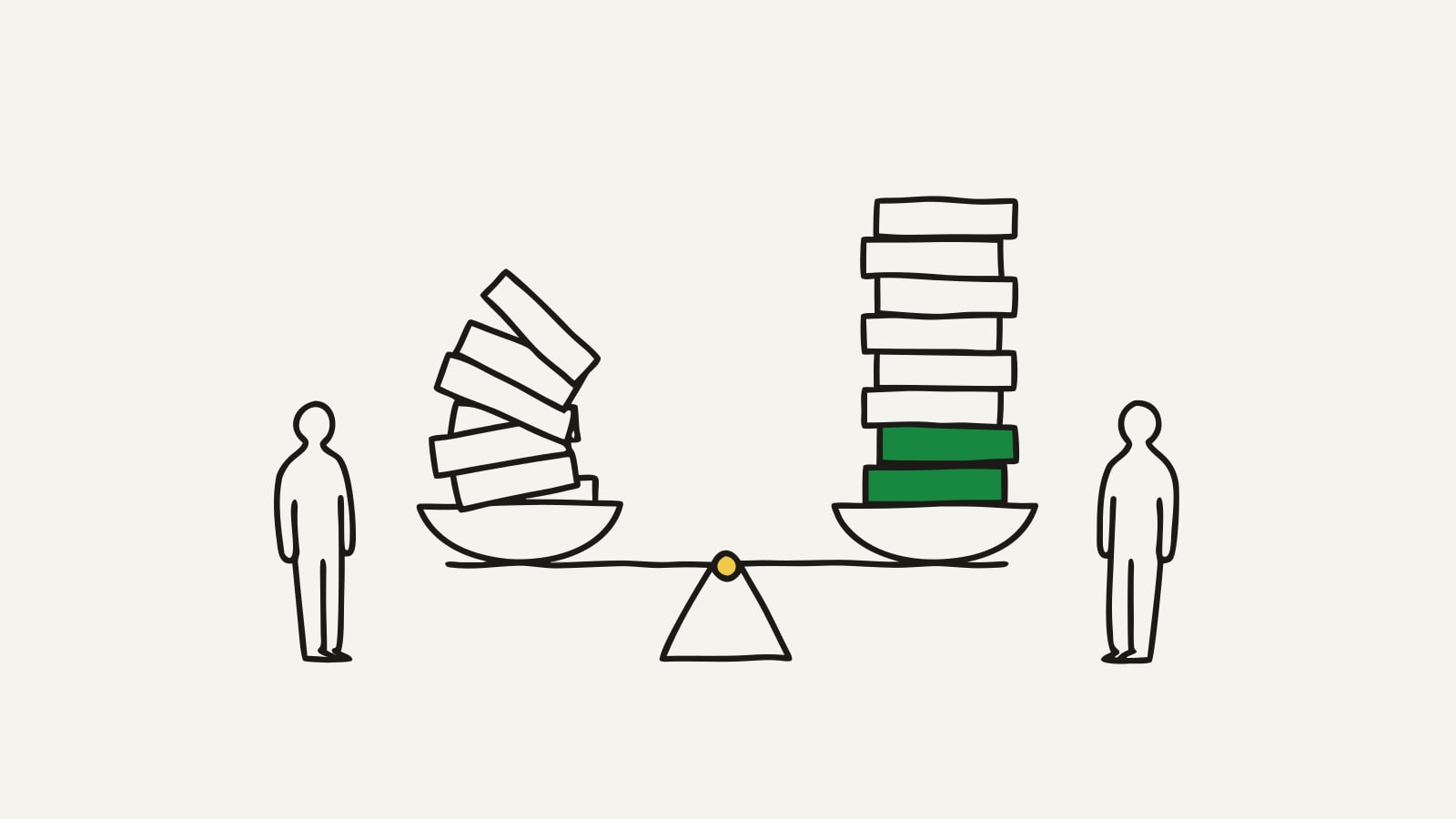
When a timeline feels long, the first instinct is to add people. It rarely works the way you'd hope. Software work splits imperfectly: two developers aren't twice as fast as one, because they now spend part of every day keeping their halves of the app consistent with each other. Past a certain point, a bigger team is mostly a bigger meeting.
What actually predicts the finish date is how much the app does. A 30-module scope takes months whether three people build it or eight. A 10-module scope can ship in weeks with one good developer.
So if you want a shorter timeline, don't shop for a bigger agency. Shop for a smaller version one. Cutting a feature from the first release saves every hour it would have taken to design, build, test, and discuss. No hiring decision saves time at that rate.
This is also why timeline estimates vary so wildly between builders. Hand five developers a vague paragraph and you'll get answers ranging from eight weeks to eight months, because each of them is quietly imagining a different app. Hand them the same itemized scope and the answers cluster. The spread was never about speed. It was about what they thought you meant.
The same clarity decides how you should pay for the work, too. Once the scope is written down, fixed price vs hourly software development becomes a real choice instead of a coin flip, because both sides finally know what the job is.
How long does it take to build an app, phase by phase?
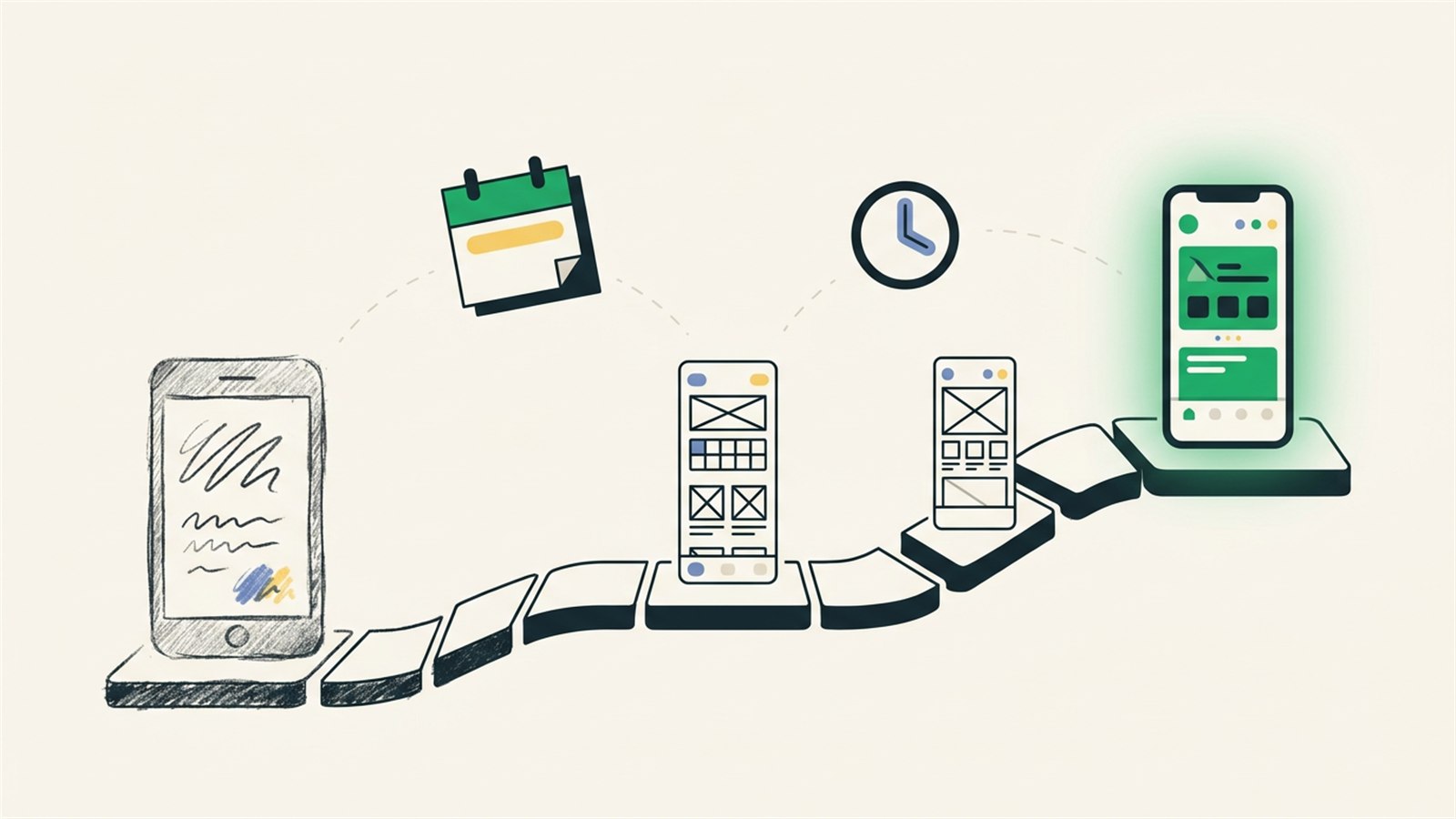
A healthy project moves through five phases. They overlap a little in practice, but each one has a distinct job, and skipping a phase doesn't remove its work. It just moves the work somewhere more expensive.
Phase 1: Scoping (1 to 2 weeks)
This is where you decide, in writing, what version one includes and what waits for later. Which users exist, what each of them can do, and what happens when things go wrong. It's the cheapest phase and it determines all the others, because every item left undecided here becomes a delay later. You don't need technical language for any of it. If you can explain your app idea to a developer in plain English, you can do most of this phase yourself, before you've hired anyone.
Phase 2: Design (1 to 3 weeks)
Design isn't decoration. It's the process of turning "users can book a slot" into actual screens: the calendar view, the confirmation, the screen for when no slots are free, the message when a card is declined. A simple app that leans on familiar patterns can be through design in a week. An app with a novel interface, or a brand that needs to feel premium from day one, can take three.
Phase 3: Build (3 to 8 weeks)
The part everyone pictures when they imagine app development. Developers work through the plan module by module: accounts one week, bookings the next, payments after that. Here's the counterintuitive bit. When the scope is settled, the build is the most predictable phase of the five, a steady rhythm of features moving from planned to working. When the scope isn't settled, this is where the timeline goes to die. It's also the phase where progress is easiest to check: ask for a working version at the end of every week, and you'll always know exactly where things stand.
Phase 4: Testing (1 to 2 weeks)
Testing isn't a formality tacked on the end. It's people deliberately trying to break your app: paying with a failing card, booking the same slot twice, losing signal halfway through signup. Every bug found here costs minutes to fix. The same bug found by your first real customer costs trust, and trust is the one thing a new app can't buy back. A useful rule of thumb: testing time scales with the number of ways money or data can move through your app. More payment paths and more user roles mean more testing, however clean the code.
Phase 5: Launch (about a week)
Going live is its own small project: app store review if you're on mobile, which usually takes a few days, then switching on real payments, watching the first live users, and fixing the small surprises that only show up in the real world. Budget a week and you'll rarely be caught out. If you're web-only, there's no store review to wait on, and launch can shrink to a day or two.
Put together, a typical first version looks like this:
| Phase | What happens | Typical duration |
|---|---|---|
| Scoping | Version one is decided and written down, edge cases named | 1 to 2 weeks |
| Design | Every screen and state, from rough sketches to final layouts | 1 to 3 weeks |
| Build | The plan becomes working software, module by module | 3 to 8 weeks |
| Testing | Deliberate breaking, bug fixing, edge cases exercised | 1 to 2 weeks |
| Launch | Store review, go-live, monitoring, first quick fixes | About 1 week |
Add the columns and you get roughly 7 weeks at the small end and 16 at the large end, which is exactly where most well-run first versions land.
See where your weeks would go
Describe your idea in plain English and get an itemized build plan, split into phases and modules, so you can see the shape of the work before anyone writes code.
Get your build planHow long does it take to build a web app?
Usually a week or two less than a mobile app of the same scope, and the reasons are practical.
A web app skips app store review entirely. That removes the launch-week wait on Apple or Google, and it removes the risk of a rejection sending you back for another round of changes. It also ships as one product instead of two: no separate iOS and Android builds to keep in step, and no spread of phone models to test across.
So a booking tool that would take 8 weeks as a mobile app often lands at 6 to 7 as a web app. The phases don't change, and neither do the levers. Screens, user types, integrations, and decisions set the timeline either way.
If you're not sure which you need, that's a scoping question, not a technical one. Plenty of first versions launch as a web app, prove the idea with real users, and add a mobile app once those users ask for one.
What quietly doubles an app development timeline?
Almost never the code. The projects that blow through their dates are undone by three habits, and all three are avoidable.
Mid-build scope changes. "While we're at it, could users also..." is the most expensive sentence in software. A feature added during the build costs far more than the same feature planned up front, because it has to be designed around work that already exists, built, and then retested alongside everything it touches. One casual addition per week is enough to turn a 10 week project into a 20 week one.
Slow decisions. A developer who asks "what should happen when a booking clashes?" and waits three days for an answer isn't building during those three days. Or worse, they're building a guess you'll later pay to change. Decision lag is invisible on invoices and enormous on calendars, and it's the one delay that's entirely on your side of the table.
Unclear edge cases. What happens when a payment fails halfway through? When two people grab the last slot at the same moment? Every edge case discovered mid-build triggers a conversation, a design change, and rework. Every edge case named during scoping is just another line item, priced and scheduled like everything else.
Most app projects don't run late in the code. They run late in the decisions.
The pattern across all three is the same. The work didn't grow, the certainty shrank. Which is why the fix isn't longer hours or a stricter contract. It's the next section.
How do you compress the timeline without cutting corners?
There's a fast version of every project, and it doesn't involve rushing anyone. It involves moving the thinking earlier.
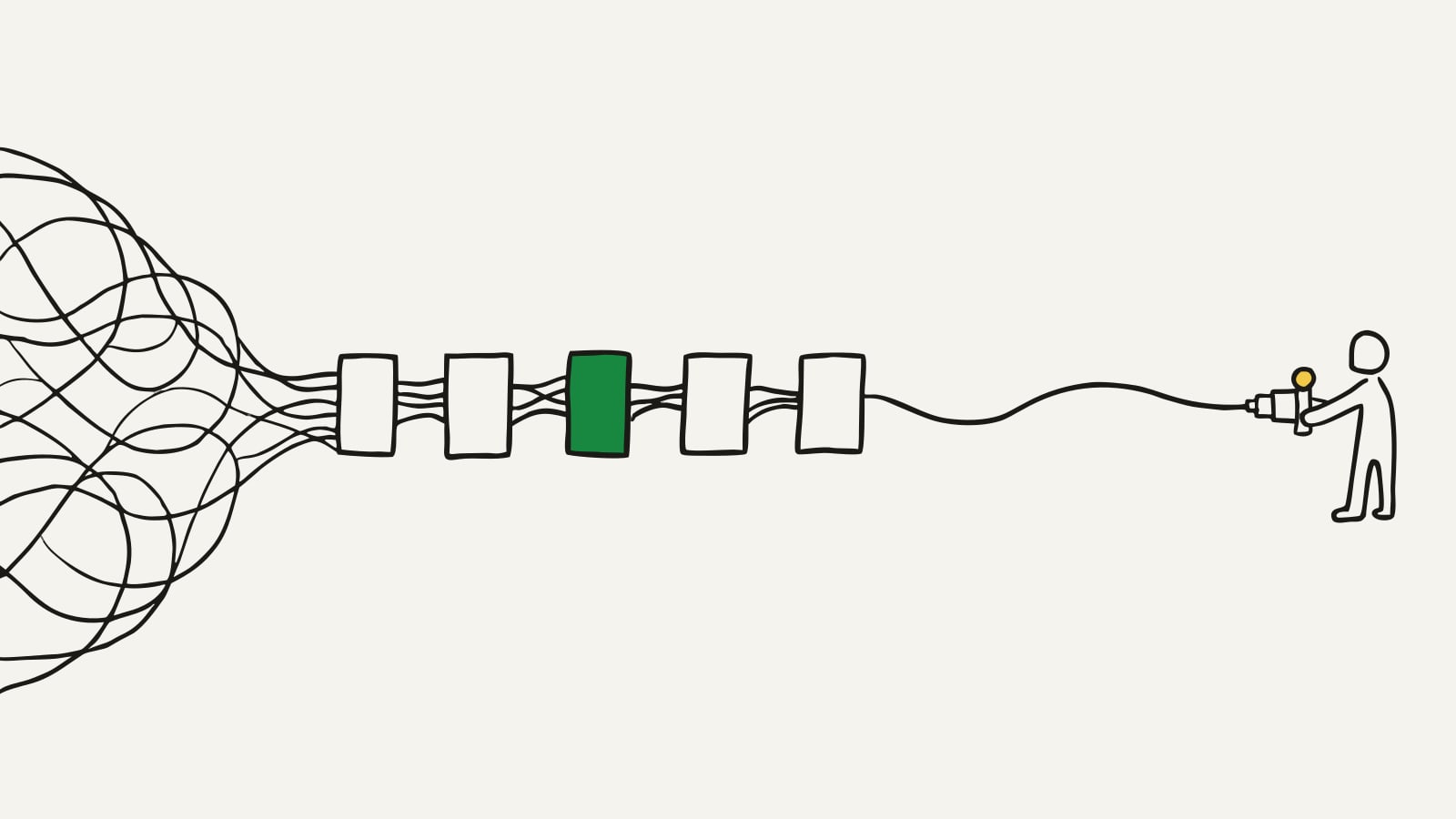
Decide everything before anyone codes. This is the whole game. A build where every question was answered during scoping runs at full speed from day one, because nobody ever has to stop and ask.
Freeze version one. Keep a Phase 2 list and be proud of it. Every good idea that arrives mid-build goes on the list instead of into the build. You lose nothing, the ideas keep their place, and the timeline keeps its shape.
Answer same-day during the build. When a question comes in, treat it like the meter is running. Because it is. Agree on one channel where questions land, and check it like it's your job for those few weeks. It is.
Cut scope, never steps. Skipping testing to hit a date doesn't save time, it borrows time at painful interest. If the date truly matters, ship a smaller app that's completely finished rather than a bigger one that's almost finished.
Do those four things and the compression is real. Not through heroics or overtime, but because nobody is waiting, guessing, or redoing.
What about AI? It genuinely compresses the building and barely touches anything else. Scoping, decisions, testing, store review and fixing what real users find are all unchanged, and those are most of the calendar. A weekend demo is a real thing you can now have. For where that speed stops, whether ChatGPT can build a mobile app walks through the three finish lines and how far apart they really are.
Your timeline is set before the first line of code
Six to sixteen weeks is a realistic window for almost any first version. But that window is earned in the first two weeks, when you decide exactly what you're building and write it down where everyone can see it.
That's a document you can create today, for free. Get an itemized build plan: your idea split into phases and modules, each part explained and estimated, ready to hand to any developer with one very reasonable question. How many weeks?
Common questions
How long does it take to build an app?
A well-scoped first version typically takes 6 to 16 weeks from kickoff to launch. Simple apps with one core function land near the low end, while apps with accounts, payments, and admin tools land near the high end. Estimates far beyond that usually point to a scoping problem rather than a genuinely enormous project.
How long does it take to build an MVP?
Most MVPs take 6 to 12 weeks when the scope is written down before development starts. The build itself is usually 3 to 8 of those weeks, with the rest spent on scoping, design, testing, and launch. The fastest MVPs are the ones where every decision was made before the first line of code.
How long does it take to create an app from scratch?
Creating an app from scratch typically takes 6 to 16 weeks: 1 to 2 weeks of scoping, 1 to 3 of design, 3 to 8 of build, then testing and launch. The clock starts at kickoff, not at the idea. The projects that finish fastest arrive with the scope already written down: what version one includes, which users exist, and what each screen does.
How long does app development take on average?
For a well-scoped first version, app development takes 10 to 12 weeks on average, from kickoff to launch. The programming itself is usually 3 to 8 weeks of that. The rest goes to scoping, design, testing, and launch, which is why two apps with identical code can finish months apart.
Can an app be built in a month?
Yes, if the scope is genuinely small: one core loop, a handful of screens, and no complex integrations. It also takes fast decisions, because a four-week build has no room for a three-day wait on an answer. Anything with payments, multiple user roles, or app store review is usually tight in four weeks.
Does hiring more developers make an app build faster?
Less than most people expect, and sometimes not at all. Software work splits imperfectly, so extra people add coordination time along with capacity. The size and clarity of the scope predicts the finish date far better than the size of the team.
Why do app projects take longer than the original estimate?
The usual causes are mid-build scope changes, slow decisions, and edge cases nobody defined up front. Each one forces rework, because something already built has to be redesigned, rebuilt, and retested. Projects that lock scope early and answer questions quickly tend to finish close to the original estimate.
Get a build plan for your idea
Describe what you want to build and get a clear, itemized plan in a couple of minutes.
Get your build plan